
Allergen management is ever-changing. The pace of regulatory change now demands sharper systems, clearer communication and total confidence in labelling accuracy for food businesses operating across the UK and Europe.
Recent high-profile cases and ongoing scientific research continue to shape how allergens are regulated, communicated and enforced. For example, new legislation covering allergen management in schools, known as Benedict’s Law, has been passed following the tragic death of five-year-old Benedict Blythe by anaphylaxis. The School Allergy Safety Bill, which was read into the House of Commons last year, sets out the need for mandatory allergy safety measures in schools and reinforces the growing expectation for robust allergen controls, clear communication and accountability across all food settings.
This bill, along with existing Natasha’s Law regulations, highlight not only the continuing, but growing need for sensitivity, responsibility, and transparency when discussing labelling for food allergens. As operators face growing scrutiny around food information obligations, kitchens across the UK and Europe – restaurants and cafes, schools and hospitals, hotels, sports stadia and contract caterers – must stay aligned with evolving guidance on allergen risk, cross-contact and consumer transparency.
A Moving Regulatory Picture
UK and EU food law requires businesses to clearly identify and communicate the 14 legally recognised allergens. These include gluten, milk, eggs, fish, crustaceans, molluscs, peanuts, soya, sesame, mustard, celery, lupin and sulphur dioxide.
What continues to change is the way regulators expect this information to be presented and controlled, as emerging research into allergic reactions reinforces the need for precision and clarity.
- Increased focus on prepacked for direct sale foods
- Raised expectations for both labelling systems and operational discipline to ensure consistency across sites and the prevention of human error
- Allergen information must be accurate at the point of preparation and remain reliable throughout storage, handling and service.
- Experts also calling for potential additions to the current list of 14 allergens, with pine nuts and goat’s milk frequently cited as candidates for mandatory labelling due to reported allergic reactions
Businesses must therefore remain alert not only to how allergens are communicated, but also to what may soon require declaration.
Read more about this here: https://www.bbc.com/news/articles/c5ypgrzxx9go
The Operational Reality for Kitchens
Busy kitchens manage complex menus, frequent recipe changes and rotating staff. Each of these factors increases the risk of incorrect or outdated allergen information appearing on a label.
Labelling without the proper tools – like automated labelling machines or labelling kits – relies heavily on individual judgement and memory. Printed sheets and handwritten notes struggle to keep pace with regulatory updates or menu changes. When guidance shifts, updating processes across multiple locations becomes time consuming and inconsistent This is where confidence can quickly erode.
The Right Tools for Allergen Safety
Simply reacting to regulatory change is not enough in the face of allergen risk. By investing in a robust labelling program to manage allergens, businesses gain a system that evolves with them. This reliability reassures teams, auditors and customers alike.
Automated Allergen Labelling
NCCO supports food businesses navigating compliance through practical technology and labels built for real kitchen environments. The DateCodeGenie® automated labelling system sits at the centre of this product universe. The system is designed to bring clarity, control and confidence to allergen management, enabling kitchens to manage allergen information accurately and consistently as guidance evolves.

For many operations, the DateCodeGenie® automated labelling system provides a centralised, controlled way to ensure allergen information is accurate at the point of preparation and remains consistent across sites. By reducing reliance on handwritten notes and memory, automated systems help strengthen compliance and minimise human error.
Manual Allergen Labels and Allergen Kits
At the same time, clear and consistent manual allergen labels remain a vital part of a comprehensive allergen management strategy. Our allergen labels create a consistent and recognisable visual alert across kitchens. This uniform approach avoids confusion while still clearly drawing attention to allergen information.
For example:
- RAPDU24R – A 50mm label designed to call attention to potential allergens while also sharing important date and use-by information. Its removable adhesive makes it durable in busy kitchen environments while allowing for clean removal when required.
- RALRG22R – A 50mm “Allergen Alert” label that clearly highlights critical allergen information. Like RAPDU24R, it features removable adhesive to support efficient clean-up and relabelling processes.
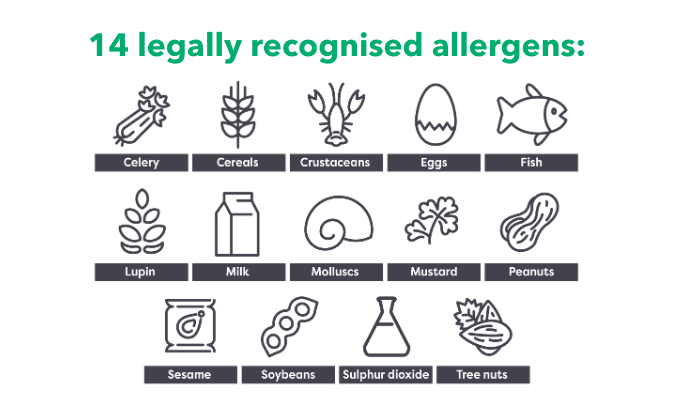
For operations managing multiple allergens daily, NCCO’s Allergen Kit provides a practical, ready-to-deploy solution. The kit includes 14 individual 1,000-label rolls covering allergen codes RA-CEL11R through RA-TRE11R (25mm x 25mm), along with a 1,000-label roll of the 50mm x 50mm RALRG22R “Allergen Alert” labels. This ensures teams have immediate access to clearly marked, consistent allergen identifiers in one consolidated package.
Keeping People Safe in Every Dining Situation
Whether through automated systems like DateCodeGenie® or structured manual labelling solutions and allergen kits, the objective remains the same: clear communication, operational consistency and total confidence in allergen control.
Allergen guidance will continue to develop as regulators respond to new evidence and public expectations. With new legislation such as Benedict’s Law and potential future additions to allergen lists, adaptability is no longer optional.
Businesses that invest in flexible, reliable systems now place themselves in a stronger position for whatever comes next. The right labelling tools ensure allergen management becomes a controlled process rather than a constant concern.